Devon · EX1
In-school music lessons across Exeter
We staff it, cover it and record it. Your school keeps its timetable.
We work with Exeter schools so that learning an instrument happens at school, like everything else a child learns.
There are 53 primary schools in and around Exeter. The largest is St Leonard's (CofE) Primary School, with around 620 children, and 14 of them are the size an in-school music service usually runs in.
Nothing extra for your staff to run.
- Government-backed provisionDelivered with music education hubs across England
- Music Hub partnerLocal music education hubs
- Funded places availableSchool and hub funded provision
Teachers, instruments and cover
We staff the lessons and cover them when somebody is ill. Your school does not find a replacement.
Inside the school day
A room and a rotating slot. Groups of one to twenty-one, in term time, so the same subject is never missed twice.
Safeguarding and records held by us
Checks, registers, practice notes and evidence, kept by us and available to your team whenever you ask.
Two payers, and never both
A place is funded by the school or paid for by the family, never part of each. Many schools fund a set number of places and the other families pay. Which applies depends on the school, not on who asks first.
- Primary schools here
- 53
- Towns on the same round
- 3
- Instruments taught here
- 5
- Children in a group
- 1-21
September, the big intake
This week in Exeter
First week back in Exeter: timetables settle, rooms get allocated, and the first lessons of a child's playing life happen.
ONE CLEAR NEXT STEP
From a first conversation to music in a Exeter school.
One conversation
You name the school. We find out what is already running there, what the funding allows, and what we could put on next term.
A room and a slot
You give us a room and a rotating slot. Nothing else on your timetable changes, and the rotation is what stops one subject losing out.
We staff it and we cover it
Our teachers arrive, teach in groups of one to twenty-one, and we send cover when somebody is ill. Your office is not asked to find anybody.
The records come back to you
Registers, practice notes and safeguarding evidence, held by us and open to your team. We bill families directly; you keep the relationship.
THE REGISTER
Primary schools in Exeter
These are the schools we hold for Exeter. If yours is one of them and you want the music service running in it, that is one conversation.
Every primary school in and around Exeter, from the Department for Education’s register - 53 of them. 14 are the size we usually start with.
- Willowbrook SchoolPrimary, around 430 childrenOur usual size
- Montgomery Primary SchoolPrimary, around 440 childrenOur usual size
- Pinhoe Church of England Primary School & NurseryPrimary, around 480 childrenOur usual size
- Exwick Heights Primary SchoolPrimary, around 500 childrenOur usual size
- St Martin's CofE Primary & Nursery SchoolPrimary, around 480 childrenOur usual size
- Westclyst Community Primary SchoolPrimary, around 550 childrenOur usual size
- Bowhill Primary SchoolPrimary, around 450 childrenOur usual size
- Trinity CofE Primary and Nursery SchoolPrimary, around 460 childrenOur usual size
- Alphington Primary SchoolPrimary, around 470 childrenOur usual size
- Exminster Community PrimaryPrimary, around 390 childrenOur usual size
- Monkerton Community Primary SchoolPrimary, around 490 childrenOur usual size
- Broadclyst Community Primary SchoolPrimary, around 520 childrenOur usual size
- St Leonard's (CofE) Primary SchoolPrimary, around 620 childrenOur usual size
- St Michael's Church of England Primary AcademyPrimary, around 460 childrenOur usual size
- Wynstream Primary School AcademyPrimary, around 300 children
- Whipton Barton Junior SchoolPrimary, around 210 children
- St Gabriel's CofE Primary SchoolPrimary, around 180 children
- Whipton Barton Infants and Nursery SchoolPrimary, around 200 children
- Countess Wear Primary SchoolPrimary, around 170 children
- Woodbury Salterton Church of England Primary SchoolPrimary, around 40 children
- Woodwater AcademyPrimary, around 330 children
- St David's CofE Primary SchoolPrimary, around 90 children
- St Thomas Primary SchoolPrimary, around 190 children
- Cockwood Primary SchoolPrimary, around 90 children
- St Nicholas Catholic Primary SchoolPrimary, around 270 children
- Rockbeare Church of England Primary School and Pre-SchoolPrimary, around 160 children
- Stoke Hill Junior SchoolPrimary, around 350 children
- Ladysmith Junior SchoolPrimary, around 340 children
- Brampford Speke Church of England Primary SchoolPrimary, around 50 children
- Kenn Church of England Primary SchoolPrimary, around 90 children
- The Duchy School BradninchPrimary, around 210 children
- Lady Seaward's Church of England Primary SchoolPrimary, around 100 children
- Kenton Primary SchoolPrimary, around 60 children
- Clyst Heath Nursery and Community Primary SchoolPrimary, around 350 children
- Ladysmith Infant & Nursery SchoolPrimary, around 280 children
- The Topsham SchoolPrimary, around 190 children
- Newtown Primary SchoolPrimary, around 130 children
- St Sidwell's Church of England Primary School & NurseryPrimary, around 200 children
- Stoke Canon Church of England Primary School and Pre-SchoolPrimary, around 90 children
- Stoke Hill Infant and Nursery SchoolPrimary, around 280 children
- Silverton Church of England Primary SchoolPrimary, around 110 children
- Clyst St Mary Primary SchoolPrimary, around 170 children
- Cheriton Bishop Community Primary SchoolPrimary, around 120 children
- Woodbury Church of England Primary SchoolPrimary, around 200 children
- Christow Primary SchoolPrimary, around 100 children
- Ide Primary SchoolPrimary, around 140 children
- Newton St Cyres Primary SchoolPrimary, around 130 children
- Tedburn St Mary SchoolPrimary, around 90 children
- Whimple Primary SchoolPrimary, around 130 children
- Doddiscombsleigh Primary SchoolPrimary, around 40 children
- Payhembury Church of England Primary SchoolPrimary, around 90 children
- Thorverton Church of England Primary SchoolPrimary, around 110 children
- Dunsford Community AcademyPrimary, around 100 children
Name yours and we will find out what is possible there - the funding, the room, and what could be on the timetable next term. A school without the mark is not ruled out. It is smaller than the size we usually start with, which is a different sentence.
School names and roll are from the Department for Education’s Get Information about Schools register, used under the Open Government Licence v3.0. Roll is rounded, because it is a census count that moves every September.
KEYS. STRINGS. RHYTHM. VOICE.
What we would teach in Exeter
A school agrees its own provision with us. These are the instruments our teachers already carry into schools in this part of the county.
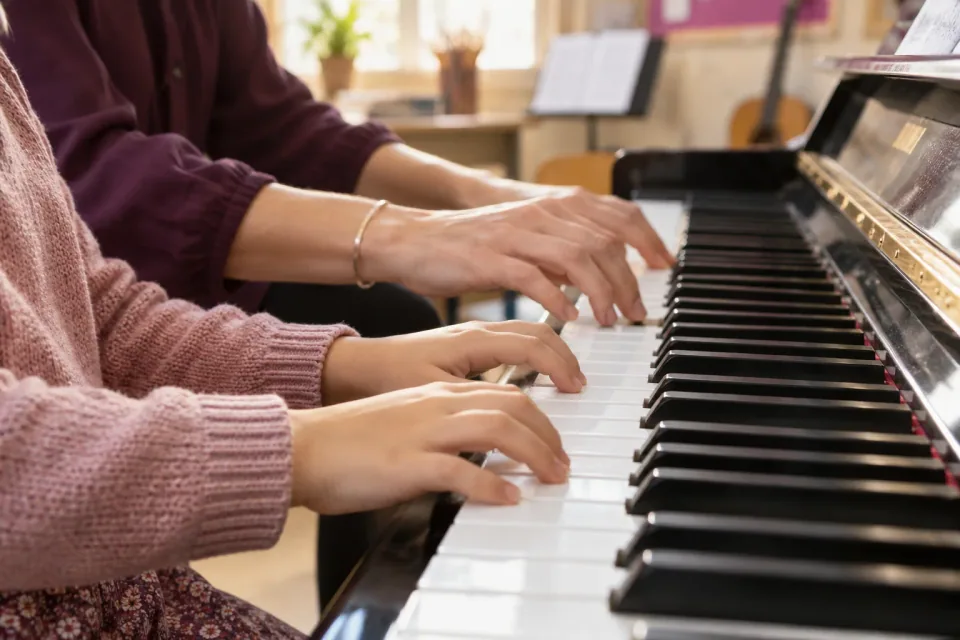
Piano
Guitar
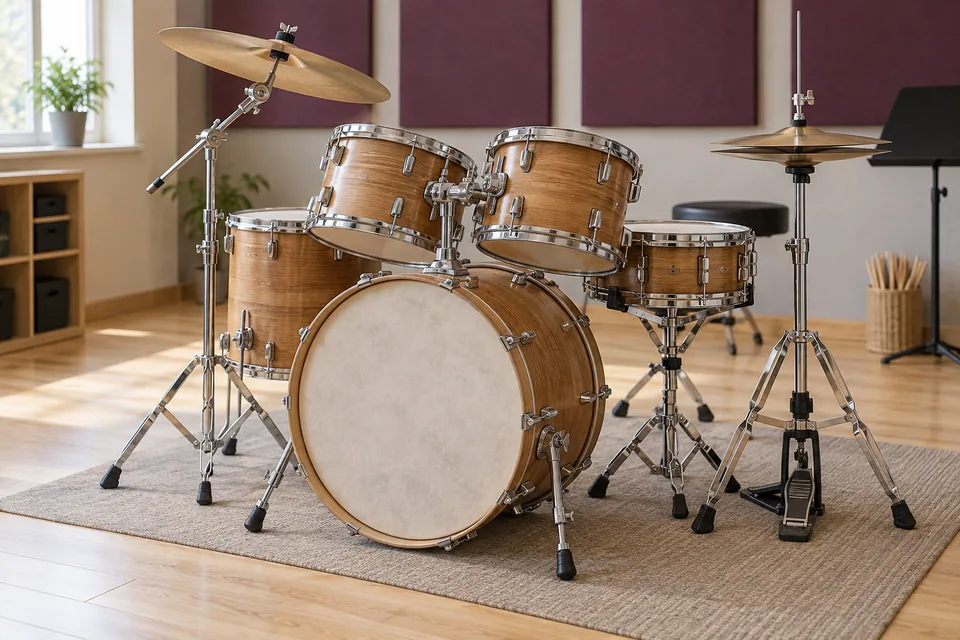
Drums
Singing
Ukulele
Groups of one to twenty-one, so a child can start alongside their friends or on their own, and move between the two as they get better.
THE SAME ROUND
Near Exeter
Our teachers travel a fixed weekly round, which is what makes cover possible when somebody is ill. These are the places on the same one.
WHO PAYS, AND WHEN
Who pays for a place
A place has one payer and never two. Which one applies at a school in Exeter depends on that school and its funding, not on who asks first. Ask and we will tell you what is available at yours.
Funded places available
A school funds a number of places, so those children pay nothing. How many depends on the school and its funding.
Family-paid places
A flat monthly plan, the same every month, with missed lessons made up rather than refunded.
IN MORE DETAIL
More about the service in Exeter
A page each, written for the question rather than for the search. The same service, answered the way a different reader would ask about it.
ONE CONVERSATION
Open a partnership conversation in Exeter
Name the school and we will find out what is possible there. It costs you a sentence, and it is how most of our partnerships began.